
Location: Washington, D.C.
Phone: 202-386-6920
Fax: 202-765-2173
Email: eugene@burnhamgorokhov.com
When the case looks bad, don’t stop looking.
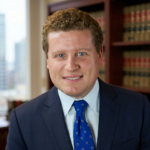
Eugene Gorokhov represents individuals and companies facing serious federal criminal investigations and prosecutions. His practice focuses on complex white-collar cases, where the government’s evidence can be extensive and its theory of the case can appear difficult to challenge.
But Eugene does not assume that the government’s version is the whole case.
The question is whether the evidence actually supports the story the government is telling.
That question shapes how Eugene approaches a case. He looks closely at the government’s evidence, the assumptions behind it, the investigation that produced it, and the conclusions drawn from the facts. He works with his team to find what may have been overlooked—and to determine whether something that initially looks damaging can be understood differently.
The cases below reflect Eugene’s approach in matters he has led. This overview describes representative matters and outcomes. Each case is unique and is decided on its own facts and the applicable law. Prior results do not guarantee or predict a similar outcome in any future matter. The descriptions of past results are not a promise or guarantee of any particular result in your case.
$30 Million Alleged Fraud. Reduced to Less Than $500,000. Probation.
The government wanted our client to plead guilty to a $30 million fraud that it repeatedly described as a “Ponzi-like scheme.” Rather than accept either the number or the label, we went back through the witnesses, contracts, and accounting. How had the government actually arrived at $30 million?
The alleged fraud went from $30 million to $11 million, then $6 million, and ultimately less than $500,000. And the character of the case changed with it. What the government had portrayed as a massive Ponzi-like fraud was, based on the evidence, misappropriation.
The case was resolved with probation.
Called a “Fugitive.” Indictment Dismissed.
In a cross-border binary options fraud case, the government called our client a fugitive because he would not voluntarily return to the United States. But if the government wanted him prosecuted, what had it actually done to bring him back?
We looked closely at its efforts—or lack of them—to secure his return, and at the constitutional consequences of the delay. The focus shifted. What the government had presented as our client’s failure became a question about the government’s own failure.
That changed the case. The indictment was dismissed with prejudice—ending the prosecution and preventing the government from bringing the same charges again.
Access Device Fraud Conspiracy. Failure to Investigate. Complete Jury Acquittal.
The government charged our client as a participant in an access-device fraud conspiracy. Its case depended in significant part on who was interacting with the victim’s bank. So we asked a simple question: What do the actual recordings of those calls show?
We subpoenaed them. The government hadn’t. The recordings showed that the person making the calls was not our client. At trial, we called the government’s own agent and showed a broader pattern of sloppy investigation and mistaken assumptions. A federal jury in Virginia acquitted our client.
Health Care Fraud / Anti-Kickback. The Missing Intent. Complete Jury Acquittal.
The government had recordings and admissions showing that our client recruited patients for money. It thought that was enough. But the charges required proof that he understood that what he was doing was unlawful.
Eugene saw an important distinction: the recordings showed what our client did. They did not necessarily show what he understood about the law. We built the defense around that distinction and brought out instances in which the government’s investigation and presentation of the case were unfair and, at times, misleading.
The jury was given reason to question not only what the government’s evidence meant, but how much confidence it could place in the government’s account of the case. A Maryland federal jury acquitted our client of health care fraud conspiracy and conspiracy to violate the Anti-Kickback Statute.
More Than Two Years of Delay. Government’s Own Failure. Prosecution Dismissed.
For more than two years, the government participated in seeking delays in a federal health care fraud case. We came into the case with 15 days to prepare.
For two years, the government said the additional time was necessary to provide the defendants with the evidence they were entitled to receive. Now, it was demanding the trial go forward.
So we looked at what had actually happened during those two years.
We found serious problems. The government failed to turn over important evidence in its possession while representing to the court that additional time was necessary to provide the defendants with the evidence.
The government had used the delay to its advantage while failing to do what it had told the court the delay was for.
We challenged the government’s conduct under the Speedy Trial Act.
The court found a chronic and indefensible lack of diligence by the government, and dismissed the indictment with prejudice—ending the prosecution and preventing the government from bringing the same charges again.
North Korea. $74 Million. Two Trials. Neither Trial Resulted in a Conviction.
The government charged our client with participating in a sophisticated international tobacco-smuggling and sanctions-evasion scheme involving North Korea. It alleged more than $74 million in transactions through U.S. financial institutions.
It had an FBI forensic accountant, undercover recordings, search warrants, and an enormous volume of evidence. It looked formidable. So we asked a different question: What did all of that evidence actually prove? Owning a company did not establish that our client knew everything the company was doing.
The government’s forensic accountant was not simply an expert whose conclusions we had to accept. We showed that his relationship with the prosecution team, his methods, and his conduct meant his conclusions were unreliable.
We did the same with the undercover recordings. What the government presented as proof of criminal conduct was actually proof of a horribly flawed undercover investigation. The recordings it touted actually undermined its theory of the case.
Then we looked at what the government’s extensive investigation had actually found. Despite the volume of emails and other material seized through search warrants, it had uncovered remarkably little evidence of the knowledge the government needed to prove.
The government’s case was no longer as simple—or as strong—as it had first appeared.
The government tried our client twice before D.C. federal juries. The first jury could not reach a verdict. The second acquitted him of the lead bank-fraud-conspiracy charge and again failed to convict him on the remaining charges. Five money-laundering counts had already been dismissed before trial.
After two trials, the government had not obtained a conviction. Our client ultimately pleaded guilty to a lesser fraud conspiracy and received credit for the time he had already spent detained.
Two trials. Two juries. And a case that looked very different by the end.
What Clients Say
“He took the time to understand every detail of the case. He developed the strategy, and never stopped fighting for me.”— Client
“[He had] incredible attention to detail and out-of-box creative thinking, which was invaluable throughout my case.”— Client
“He challenged the government, and won, on key facts completely derailing their case.”— Client
“They treated me as a person with a family and a future, not simply as another client or case.”— Client
Practice Focus
Eugene Gorokhov focuses on federal white-collar criminal defense and government investigations, representing individuals and companies in complex federal matters involving fraud, health care, money laundering, sanctions, cryptocurrency, and other serious federal offenses.
His practice includes federal jury trials, complex investigations, and challenges to federal indictments on constitutional and procedural grounds. Much of his trial experience has been as lead counsel in complex federal cases, including jury trials resulting in acquittals.
Professional and Industry Recognition
Eugene Gorokhov has been recognized by Super Lawyers as a Rising Star (2015–2016) and a Super Lawyer (2019–2025). He has also been named to Legal 500 DC Elite for White Collar Crime and recognized as a Top Lawyer by Northern Virginia Magazine.
His analysis of federal criminal cases and emerging issues is also sought outside his own practice. Law360 has repeatedly turned to him for commentary on developing white-collar issues, including evidence, criminal intent, witness testimony, cryptocurrency prosecutions, and sentencing reform. He has also appeared on BBC to provide legal commentary on a high-profile criminal case.
Professional Recognition
- Super Lawyers 2019–2025
- Super Lawyers Rising Stars 2015–2016
- Legal 500 DC Elite White Collar Crime
- Northern Virginia Magazine Top Lawyer, 2026
Court Admissions
Bars:
- District of Columbia
- Virginia
U.S. District Courts:
- District of Maryland
- Eastern District of Virginia
- Western District of Virginia
- District of Columbia
- Western District of Michigan
U.S. Courts of Appeals
- Fourth Circuit
- Tenth Circuit


This overview describes representative matters and outcomes. Each case is unique and is decided on its own facts and the applicable law. Prior results do not guarantee or predict a similar outcome in any future matter. The descriptions of past results are not a promise or guarantee of any particular result in your case. This material is attorney advertising and is provided for general informational purposes only; it is not legal advice and does not create an attorney-client relationship.